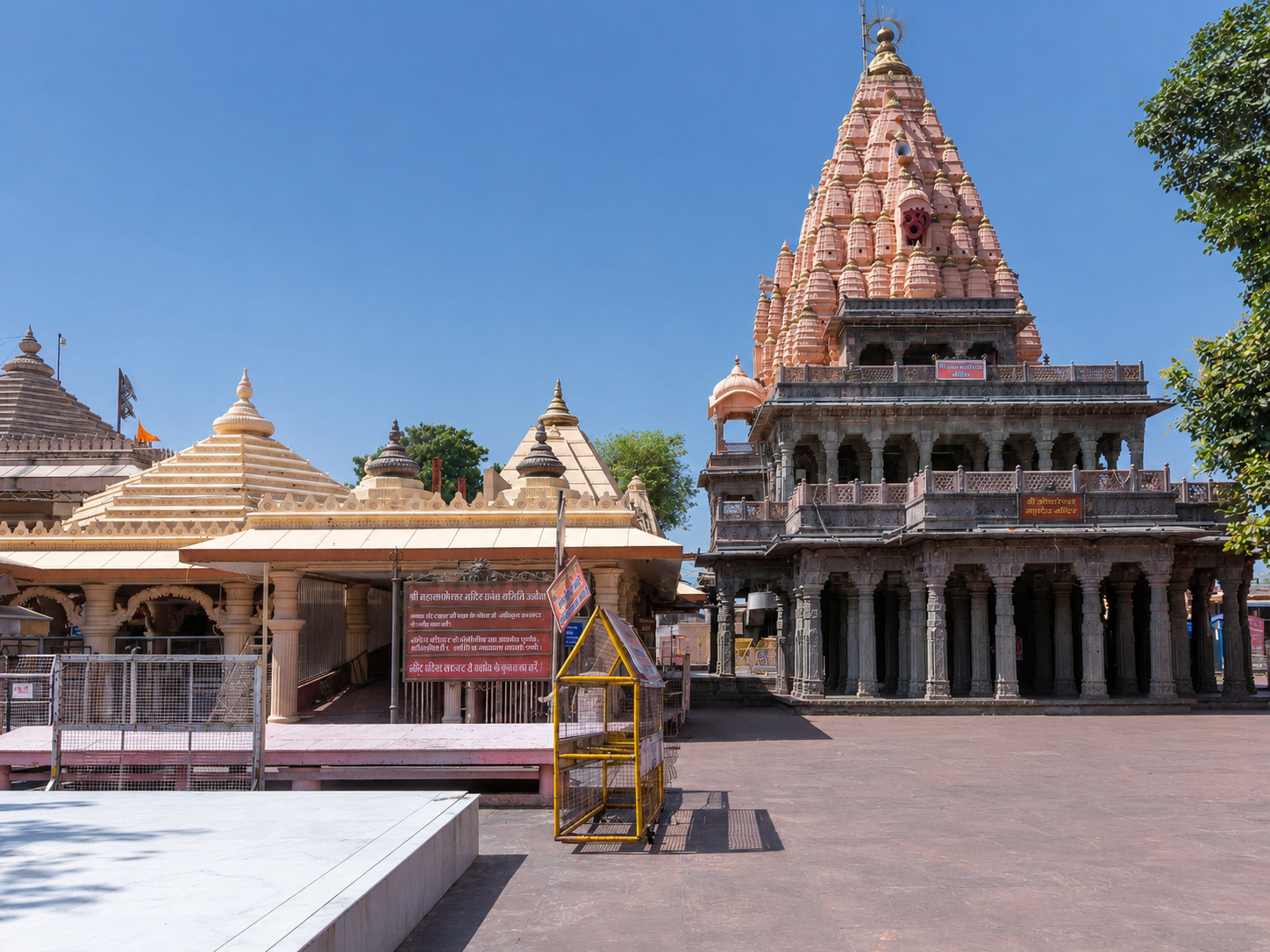
Approach: Mahakal temple approach
with managed queue and security flow
First visit? plan extra time if your
visit depends on Bhasma Aarti access
Today: To be verified • Peak:
To be verified
Jyotirlinga No. 3
Mahakaleshwar Jyotirlinga Temple
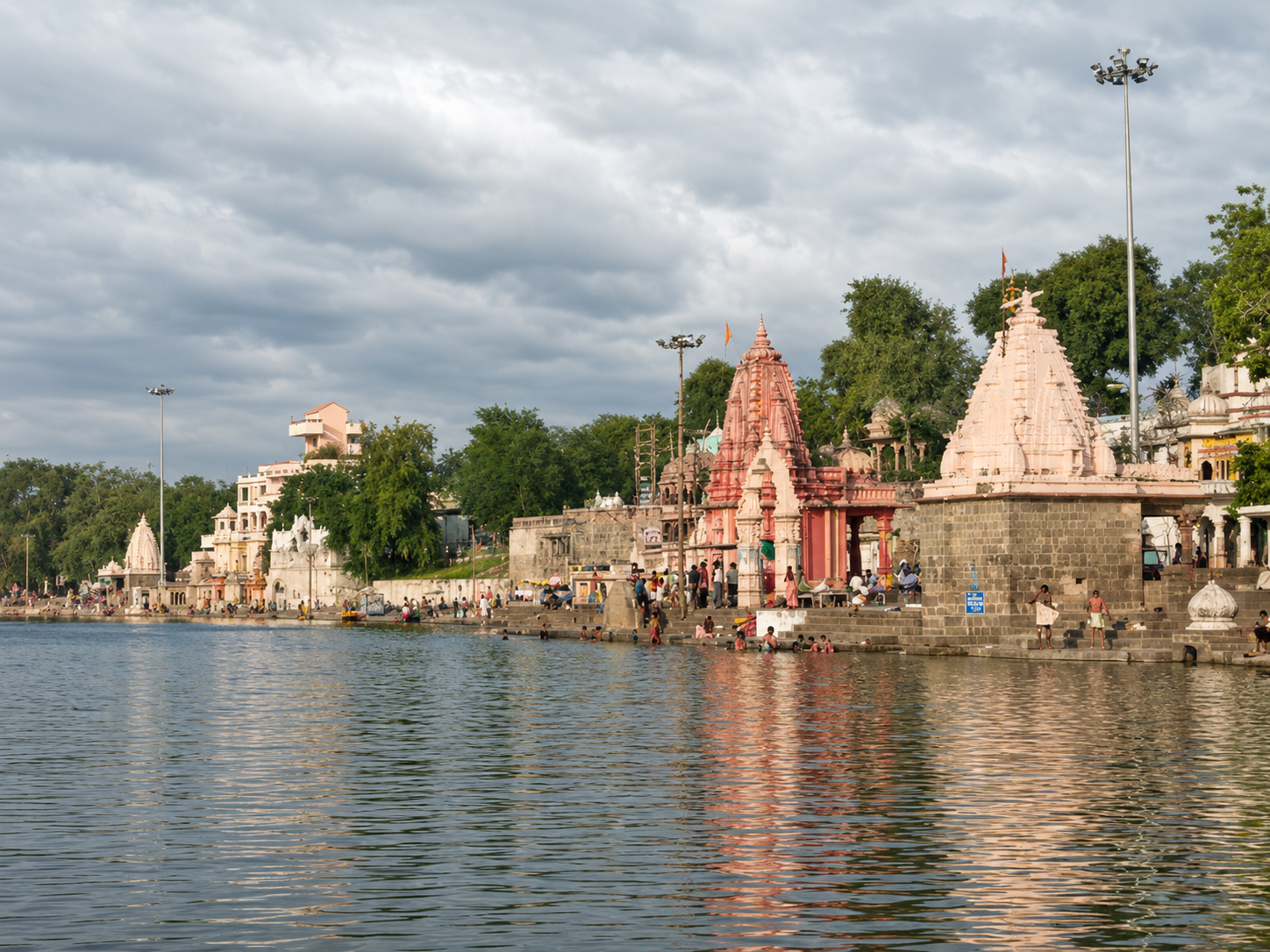
Ujjain, Madhya Pradesh, on the banks of the sacred Shipra River
Deity: Lord Shiva as Mahakaleshwar Jyotirlinga
Mahakaleshwar Jyotirlinga Temple in Ujjain, Madhya Pradesh, on the
banks of the sacred Shipra River is revered as Jyotirlinga No. 3,
the third among the 12 Jyotirlingas, and is famous for its
spiritual power, ancient history, and unique Bhasma Aarti
tradition.
Mahakaleshwar is especially revered for its Dakshinamukhi
identity, its deep association with time, death, and liberation,
and the enduring devotional power of Lord Shiva as Mahakala.
Verify before visit for timing, Bhasma Aarti access and booking
updates.
Meaning of Mahakaleshwar
The Great Lord of Time and Death
Maha means Great, Kala means
Time / Death, Ishwar means Lord, and Mahakaleshwar means The
Great Lord of Time and Death.
Maha = GreatKala = Time / DeathIshwar = LordLord of Time & Death
Temple Status
Check timing
Temple-managed daily
schedule
Crowd Expectation
To be verified
To be verified
Crowd conditions should be verified before visit
Next Aarti
To be verified
Bhasma Aarti
Best Darshan Window
To be verified
To be verified
Recommended
Verify timing and crowd conditions if your visit depends on
Bhasma Aarti.
Today: queue rhythm can shift around temple rituals and
security flow.
Map
Map
Temple Location Snapshot
Ujjain, Madhya Pradesh, on the banks of the sacred Shipra River
Understanding the spiritual importance of Mahakaleshwar
Jyotirlinga Temple
Jyotirlinga
No. 3 and the third among the 12 Jyotirlingas of Lord
Shiva
Located in the ancient city
of Ujjain on the banks of the sacred Shipra
River
Known for spiritual power,
ancient history, and the sacred Bhasma Aarti
tradition
One
of the rare Dakshinamukhi south-facing
Jyotirlingas
Connected
with time, death, liberation, and the wider Ujjain
spiritual circuit
Mahakaleshwar Jyotirlinga is
located in the ancient city of Ujjain on the banks of the sacred
Shipra River. It is regarded as the third among the 12
Jyotirlingas and is known for Bhasma Aarti, Dakshinamukhi
identity, and its deep connection with time, death, and
liberation.
Mahakaleshwar Jyotirlinga Temple faces south and is revered as a
rare Dakshinamukhi Jyotirlinga. Mahakala is worshipped as the
controller of time, death, and destruction. In Hindu tradition,
the south direction is associated with Yama, the god of death, so
Mahakaleshwar symbolizes Lord Shiva’s victory over death and
protection from negative forces.
The sacred origin of Mahakaleshwar is tied to
Lord Shiva’s fierce protection of Ujjain and the enduring
reverence of Mahakala as a self-manifested guardian against evil and
death.
According to legend, the demon Dushan
troubled the devotees of Ujjain until Lord Shiva arose from the earth as
Mahakala, destroyed the demon, and remained there permanently as the
Swayambhu Mahakaleshwar Jyotirlinga.
Sacred legend
According to legend, a demon named Dushan troubled the
devotees of Ujjain. The devotees prayed to Lord Shiva for
protection, and Shiva appeared from the earth in a fierce
form called Mahakala.
Shiva destroyed the demon and protected the devotees. At
their request, he stayed there permanently as
Mahakaleshwar Jyotirlinga. Mahakaleshwar is believed to be
Swayambhu, self-manifested, and is revered as a powerful
protector against evil and death.
Ancient legends also connect Ujjain, once known as
Avantika, with King Chandrasena and the young devotee
Shrikhar, preserving a long tradition of heartfelt Shiva
bhakti in the city.
Sacred form
Mahakala and Swayambhu presence
Lord Shiva is worshipped here as the self-manifested fierce
protector of devotees.
Ancient tradition
Avantika, Chandrasena and Shrikhar
Ujjain’s devotional memory also preserves the
Chandrasena and Shrikhar tradition with deep reverence.
Temple History
Mahakaleshwar has ancient roots in Ujjain and
is mentioned in Puranas and ancient Sanskrit literature. The shrine is
revered as a major Jyotirlinga whose history includes destruction,
rebuilding, later restorations, and renewed pilgrimage importance in the
city.
Mahakaleshwar Jyotirlinga was
destroyed during the invasion of Iltutmish in 1234-35 CE, and the present
structure was rebuilt and expanded during the rule of Ranoji Shinde and
the Maratha period.
Sacred timeline
Mahakaleshwar Jyotirlinga has ancient roots and is
mentioned in Puranas and ancient Sanskrit literature. The
temple has long held a central place in the sacred
geography of Ujjain as an ancient city of Shiva worship,
pilgrimage, and ritual learning.
Mahakaleshwar Jyotirlinga was destroyed during the invasion
of Iltutmish in 1234-35 CE. The temple later faced further
attacks, but its sacred importance was spiritually revived
through later rebuilding. The present structure was rebuilt
and expanded during the rule of Ranoji Shinde and the
Maratha period, while the current pilgrimage experience
also reflects later restorations and modern corridor
development.
Ancient record
Puranas and Sanskrit literature
Mahakaleshwar is rooted in ancient textual and devotional
tradition linked to Ujjain.
Rebuilt era
Ranoji Shinde and Maratha period
The present temple structure reflects major rebuilding and
expansion during the Maratha period.
Temple Architecture & Design
Mahakaleshwar reflects Maratha and Bhumija
architectural styles through a multi-storied temple complex, powerful
ritual spaces, and the unique below-ground sanctum experience of the
Jyotirlinga.
The temple is known for its massive
shikhara, carved pillars and mandapas, underground Garbhagriha, sacred
kund, temple corridors, and the Jyotirlinga located below ground level.
Sacred design
The temple complex is multi-storied and includes a massive
shikhara, carved pillars, mandapas, sacred kund, and temple
corridors that shape the ritual movement of devotees
through the Mahakal zone.
The underground sanctum or Garbhagriha gives
Mahakaleshwar its distinctive spiritual atmosphere because
the Jyotirlinga is located below ground level. The current
pilgrimage setting also preserves the historic shrine core
alongside later restorations and modern public-space
development.
Architecture style
Maratha and Bhumija styles
The temple combines restored shrine spaces with Maratha and
Bhumija architectural character.
Sacred layout
Underground Garbhagriha and massive shikhara
The below-ground Jyotirlinga and towering temple profile
create a distinct devotional atmosphere.
Spiritual Importance & Sacred
Features
Mahakaleshwar is revered for its
Dakshinamukhi identity, Bhasma Aarti, Swayambhu presence, and the
devotional belief that worship here brings protection, peace, and
liberation.
Mahakala is worshipped as eternal
time, the destroyer of evil, and the lord who grants protection from fear,
negative energies, and the shadow of death.
Sacred devotion
Worship at Mahakaleshwar is believed to remove fear and
negative energies. Devotees pray here for protection,
peace, health, and liberation, and the temple is regarded
as especially powerful for overcoming planetary doshas and
fear of death.
Mahakaleshwar is revered as a Dakshinamukhi Jyotirlinga
and as a Swayambhu Lingam. Mahakala represents eternal
time, destruction of evil, and victory over death, while
Bhasma Aarti remains the most distinctive ritual expression
of that sacred identity.
Ujjain is also one of the sacred cities where the
Simhastha Kumbh Mela is held, strengthening
Mahakaleshwar’s place as a major pilgrimage
destination. Exact festival schedules should be verified
before travel.
Dakshinamukhi
Jyotirlinga
Famous
Bhasma Aarti
Swayambhu
Lingam
Deep
connection with time and death
Mahakala
represents eternal time, destruction of evil, and victory over
death
Ujjain
Simhastha Kumbh Mela connection
Major ritual
Bhasma Aarti
The temple’s most famous ritual continues to shape the
rhythm of pilgrimage planning at Mahakaleshwar.
Pilgrimage link
Simhastha Kumbh Mela
Ujjain is one of the sacred cities where Simhastha Kumbh
Mela is held.
Devotional belief
Protection, peace and liberation
Devotees seek relief from fear, negative energies, doshas,
and the fear of death.
Darshan Process
A quick visual flow from entry point to
exit.
Average total time: To be
verified
Verify Before Visit
1
Reach Temple Area
Use the approved drop
point and move toward the Mahakaleshwar temple zone or
corridor approach.
2
Clear Security
Phones, bags and
restricted items are checked before entry.
3
Join Queue Lane
Enter the assigned lane
and keep darshan items ready in hand.
4
Move Final Stretch
The last approach is
controlled in batches near the shrine.
5
Take Darshan
Darshan is brief, so
move calmly and follow temple volunteers.
6
Follow Exit Flow
Continue through the
managed exit toward Mahakal Lok or nearby Ujjain
pilgrimage stops.
A simple 3-step journey to Mahakaleshwar
Temple, Ujjain
1
Step 1
Reach the City
Choose the most convenient way to reach Ujjain for Mahakaleshwar darshan.
Air
Devi Ahilya Bai Holkar Airport, Indore
Primary airport access for Mahakaleshwar visitors
Rail
Ujjain Junction
Nearest rail access for Mahakaleshwar Temple
Road
Indore-Ujjain route and Madhya Pradesh road connectivity
Regular buses, taxis and private transfers from nearby cities
Ujjain is commonly reached via Indore and the wider Madhya Pradesh road
network.
2
Step 2
Local Transfer
From the airport, railway station or bus stand, continue to the temple area.
Taxi / App Cab
Available 24/7
Recommended for a comfortable and direct ride
Auto / E-rickshaw
Readily available for shorter distances
Negotiate fare or use meter if available
Local Transport
City buses and shared autos
Connect major points in Ujjain city
Travel Time
30 - 60 minutes from airport
15 - 30 minutes from railway station, depending on traffic
Most visitors continue by taxi or auto from the airport, station or major city
transfer point.
3
Step 3
Final Temple Access
Reach the Mahakal temple approach and Mahakal Lok area through designated pedestrian
and security lanes.
Pedestrian Corridor
Final entry usually involves a short managed walk
Access rules can change with security arrangements
Security Check
All visitors must pass through security screening
Before entry
Walking Distance
Approx. 300 - 800 meters walk
From the nearest drop-off point to the temple entrance, depending on
crowd routing
Shuttle / Assistance
Local shuttles, e-rickshaws and porter services
May be available as permitted
Plan for a short walk through the Mahakal approach. Keep footwear comfortable
and carry only essentials.
Important Travel Note:
Private vehicles may not be allowed up to the main temple gate. The final access is
usually by walking through the managed Mahakal approach or by local shuttle/auto as
permitted by authorities. Check local guidelines before your visit and keep extra time
for security flow.
Check latest
timing, aarti access and crowd guidance before visit.
Verify Before Visit
Timings, Bhasma Aarti
access and crowd conditions are to be verified.
Temple StatusTo be verifiedDaily schedule and
ritual access should be confirmed before travel.
Today's
TimingTo be verified
Next AartiTo be verifiedBhasma AartiBest Darshan WindowTo be verifiedTo be verifiedCrowd ExpectationTo be verifiedTo be verifiedTemple
ClosesTo be verifiedTo be verified
Daily
Entry
Temple Timings
Temple OpensTo be verified
Best Darshan WindowTo be verified
General DarshanTo be verified
Most
sensitive ritual windowTo be verified
Temple
ClosesTo be verified
Main
Rituals
Aarti Schedule
Bhasma
AartiNextTo be verified
Dadyodak
AartiNextTo be verified
Bhog
AartiNextTo be verified
Sandhya
AartiNextTo be verified
Shayan
AartiNextTo be verified
Temple timings and aarti
schedule are to be verified.
Most devotees only need general darshan
timing, but special pujas, Bhasma Aarti access and booking process
should be verified before planning.
Verify Before Visit
Bhasma Aarti access,
Rudrabhishek and special puja booking details are to be verified.
Early-morning access
Bhasma Aarti
The most distinctive ritual draw at Mahakaleshwar.
Access, timing and reporting details are To be verified.
BookingTo be verified
Timing noteTo be verified
Advance suggestionTo be verified
Most common ritual
booking
Rudrabhishek
This is the main puja many devotees plan in advance. It
is
suited to pilgrims who want a more focused Shiva worship
experience beyond standard queue darshan.
BookingTo be verified
Timing noteTo be verified
Advance suggestionTo be verified
Ticketed aarti windows
General Aarti Windows
These aarti slots are useful for devotees who want a
defined ritual window rather than only general
darshan, especially during a shorter Mahakaleshwar
visit.
BookingTo be verified
Timing noteTo be verified
Advance suggestionTo be verified
Longer ritual planning
Laghu Rudra and special pujas
Devotees planning a more elaborate ritual should confirm
current procedure carefully because reporting, priest
allocation and temple coordination can vary by puja
type.
For most devotees, Mahakaleshwar planning
is about both season and ritual timing.
Comfortable weather helps with Ujjain visits, while earlier darshan can
improve the overall experience.
Most balanced season
October to March
Cooler temperatures make it easier to handle Ujjain temple
circuits, local transfers and longer devotional days in the
city.
Spiritually intense period
Shravan and Simhastha Kumbh Mela periods
Ujjain is one of the sacred cities where Simhastha Kumbh
Mela is held. Exact festival schedules are To be verified.
Best daily window
Early morning visits
Best daily darshan window is To be verified, especially if you are planning
around Bhasma Aarti.
Nearby Temples & Spiritual Circuit
Important pilgrimage stops to visit around
Mahakaleshwar Jyotirlinga Temple and the wider Ujjain spiritual
circuit
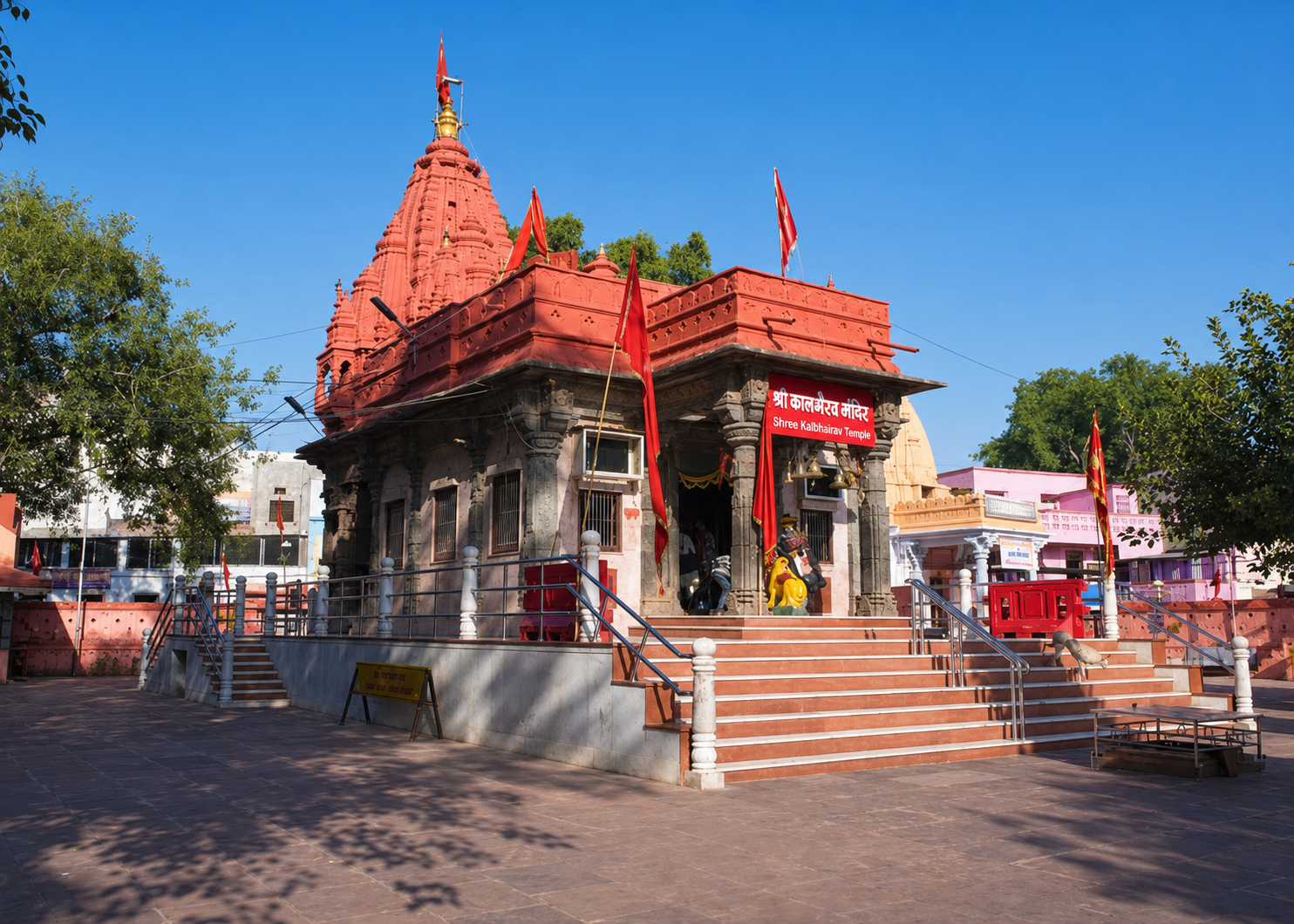
Harsiddhi Temple
Short local transfer
One of the most
commonly paired temple stops in a wider Ujjain yatra,
often visited with Mahakal Lok.
Traditional offerings at Mahakaleshwar
are simple, devotional and
closely tied to Shiva worship, with puja essentials and sacred rituals
usually arranged through trusted local vendors or approved temple
channels. For laddu or packaged prasad, check the official temple
counter availability on arrival.
Bel patra, flowers, milk or
abhishek items and Rudrabhishek remain the most familiar offerings for
devotees visiting Mahakaleshwar.
Flowers
Fresh flowers and simple puja thali items are among
the most common devotional offerings for Lord Shiva
and are easily available through trusted local
vendors near the temple approach.
Bel Patra
Bel patra remains one of the most symbolically
important
offerings in Shiva worship and is often part of
simple,
focused puja at Mahakaleshwar.
Milk / Abhishek Items
Milk-based abhishek offerings are widely associated
with Shiva worship. Devotees should follow current
temple rules and approved puja procedures before
bringing ritual items inside.
Rudrabhishek / Abhishek
Rudrabhishek is one of the most sought-after temple
rituals for devotees seeking a deeper spiritual
offering experience at Mahakaleshwar. Use official
temple channel guidance for booking and reporting.
Offering Preview
Active offering
Flowers
Active offering
Bel Patra
Active offering
Milk / Abhishek Items
Active offering
Rudrabhishek / Abhishek
Before You Visit (Important Tips)
Short reminders that help avoid confusion
and keep darshan smoother.
Avoid These Mistakes
Do not
assume Bhasma Aarti entry is available without advance
planning or official booking guidance.
Do not
carry mobile phones or large bags into restricted inner
entry zones.
Do not
rely on assumed low-crowd weekday or festival-day
patterns without current verification.
Helpful Tips for Smooth Darshan
Reach
early only after verifying current Bhasma Aarti timing
and crowd guidance.
Keep
booking confirmation, ID and simple offerings ready
before entry.
Verify
current aarti booking and entry rules through official
temple channels before travel.
Before You Visit
A little planning before you leave for the
temple usually makes the
darshan experience calmer, especially on busier aarti days.
Arrival checklist
Prepare these basics before entering the temple zone
Carry minimal
essentials so security checks and deposit needs stay
manageable.
Confirm the
latest darshan, Bhasma Aarti or puja timing before
you leave for the temple.
Bhasma Aarti
planning requirements are To be verified through official
channels.
Peak-day
arrival guidance is To be verified.
Keep extra
buffer time for queue movement, checkpoints and the
final walking approach.
Mobile
phones, bags and electronics may be restricted near
inner security zones, so travel light.
Keep booking
confirmation and ID easy to access if your ritual
slot requires verification.
Planning note
Plan for the full arrival flow, not just temple
timings
Bhasma Aarti reporting, local transfer and queue delays are
To be verified and may affect total
arrival time.
Dress Code & Allowed Items
Simple, respectful choices usually make the
visit smoother than trying
to manage extra items near a tightly monitored temple entry.
Modest clothing, light items and
simple offerings usually make entry, walking and security checks much
easier.
Clothing
Dress modestly and comfortably
Temple-appropriate clothing is the easiest choice for
darshan
lines, walking access and longer devotional visits.
Modest clothing
is
generally the safest option.
Choose easy,
comfortable clothing for walking and
waiting.
Restricted items
Check the current rules before you carry extras
Bag, phone, electronics and deposit rules can vary by
crowd
control setup, temple guidance and security
enforcement.
Confirm the
latest rules for bags, phones, electronics and
leather items.
Security and
deposit procedures may change with the
situation.
Offerings
Keep puja items simple and temple-appropriate
Simple offerings are easier to manage and more likely to
fit
current entry expectations near the temple complex.
Keep offerings
modest,
clean and appropriate for Shiva
worship.
Confirm
local
guidance if you plan to carry special ritual
items.
Accommodation Near Temple
Where you stay affects how easy an early
darshan day feels, especially
when Ujjain traffic and local transfers become part of the
plan.
Staying near the temple precinct or
a practical transfer point usually makes early darshan planning much
smoother than depending on long city transfers.
Best area to stay
Choose a base that supports your darshan timing
If temple access is the priority, stay in an area that
keeps
the morning approach manageable instead of adding a long
transfer before the queue.
Temple precinct or Mahakal Lok area
Useful for walkable temple and city access
Staying near the temple side or nearby Mahakal Lok
area can make it easier to combine darshan, local
movement and nearby temple visits in one day.
Near railway station
Practical for shorter trips and easier transfers
This area can work better for visitors arriving by train,
carrying luggage or prioritizing simpler onward travel
over
walkable town-center ambience.
Budget and comfort
Balance price, access and early-start convenience
Budget stays can work well if access is clear, while
comfort
stays are often worth considering when your visit
depends on
rest, early reporting or family travel.
Convenience note
Town-center stays can be atmospheric but slower for arrival
Staying too deep inside older town lanes may feel immersive,
but it can complicate luggage movement, auto drop-offs and very
early temple starts.
Official Info & Booking Help
Use official confirmation for ritual
planning whenever your visit depends
on a specific booking, reporting time or access rule.
Use official sources first whenever
your visit depends on a puja slot, reporting window or paid ritual
booking.
Where to confirm
Start with official sources
For puja access, timing changes and reporting
instructions,
official guidance should be your first reference point.
Temple sourceCheck official
temple
source
Booking accessConfirm from
official booking portal
Special pujasUse official
helpdesk
guidance for ritual-specific support
Before you depend on a
booking
Verify the process before you travel
Reporting windows, entry rules and ritual availability
can
shift, so final confirmation matters even after you plan
the
trip.
Ritual processConfirm the
latest
booking method from the official source
Reporting timeCheck the current
reporting window before reaching the
temple
Third-party cautionAvoid
relying
only on unverified third-party booking
claims
Trust reminder
Use verified guidance when the visit depends on a paid
ritual
If your darshan day depends on a specific aarti or puja slot,
re-check official instructions shortly before travel rather than
depending only on older summaries or unofficial listings.
Temple Location
Use this location snapshot for last-mile
planning around the temple precinct, the Mahakal Lok area and your
arrival point in the city.
CityUjjain
StateMadhya Pradesh
LandmarkNear Rudra Sagar and Mahakal Lok
Railway StationUjjain Junction
AirportDevi Ahilya Bai Holkar Airport, Indore
AccessVia Mahakal temple approach, managed queue flow and local
transport.
Live Darshan Preview
Internal live accessOpen Divine Temple Guide live darshan for the active viewing
route.
Live darshan access
Live Temple Darshan
This sidebar card keeps live darshan discoverable on the temple page
while routing viewing access through the Divine Temple Guide live section.
Use the internal
live-darshan page for the next step.
Daily darshan timings are To be verified.
If your visit depends on Bhasma Aarti or a specific ritual
window, confirm the latest daily schedule before travel.
Best visit window and crowd conditions are To be verified. Confirm the latest temple guidance
before planning around Bhasma Aarti or a quieter darshan.
Devotees should wear modest, temple-appropriate clothing.
Comfortable footwear helps before the final deposit point,
and simple traditional or respectful attire is the safest
choice for darshan and aarti visits.
Expect security checks, managed queue movement and
restrictions on phones, bags or certain items in sensitive
inner entry zones. Traveling light and reaching the temple
approach early generally makes the process easier.
Bhasma Aarti access, permission requirements and other aarti
booking rules are To be verified through
official temple channels before visiting.
Mobile phones and electronic items are usually restricted near
the main temple entry. Use locker/deposit facilities or
confirm latest rules before visiting.
Locker or deposit facilities may be available near the temple
approach, but availability can change based on crowd and
security arrangements.
Darshan duration is To be verified and can
vary by crowd, ritual window and festival-day management.
Online pooja booking availability and process are
To be verified. Check official temple
channels for Bhasma Aarti, Rudrabhishek, Abhishek and other
ritual booking rules before planning.